Whetstone carpet and upholstery cleaning insider tips for homeowners
If you live in Whetstone, you already know how quickly carpets and sofas can go from fresh to "we'll sort that at the weekend." Muddy shoes, tea spills, pet hair, winter salt, and the odd splatter from dinner all leave their mark. The good news? With the right Whetstone carpet and upholstery cleaning insider tips for homeowners, you can keep fabrics looking better for longer, avoid costly mistakes, and know exactly when a deeper clean makes sense.
This guide is written for real homes, not showroom-perfect ones. You'll find practical methods, small professional tricks, and the sort of judgement calls that help you decide whether to tackle a stain yourself or bring in a specialist. It also covers safety, fabric care, and a few clever habits that make everyday maintenance much easier. To be fair, a lot of "cleaning tips" online are just the same few lines repeated. This isn't that.
- Why it matters
- How it works
- Key benefits and practical advantages
- Who this is for and when it makes sense
- Step-by-step guidance
- Expert tips for better results
- Common mistakes to avoid
- Tools, resources and recommendations
- Law, compliance, standards, or best practice
- Options, methods, or comparison table
- Case study or real-world example
- Practical checklist
- Conclusion
- Frequently asked questions
Why Whetstone carpet and upholstery cleaning insider tips for homeowners Matters
Carpets and upholstery do more than soften a room. They hold onto everyday life: dust, fibres, food crumbs, pollen, moisture, and the fine grit that gets walked in from pavements and gardens. In a place like Whetstone, where family homes, flats, and busy commuter households all run at different speeds, that build-up can happen almost invisibly. One day the sofa looks fine; the next, the armrest has a greasy patch and the carpet under the dining table feels flat and tired.
That matters for a few reasons. First, dirt acts like sandpaper. The more it stays in the pile, the faster fibres wear. Second, spills that are left alone tend to spread deeper into the backing or cushioning, which makes cleaning harder later. Third, upholstery and carpet can quietly affect how a home smells and feels. Not dramatically, not in a panic-inducing way, but enough that you notice it when the room has just had a proper clean. That clean, open, slightly "new home" feeling? Hard to beat.
There's also a value angle. Regular care can help preserve the appearance of floor coverings and soft furnishings, which is especially useful if you plan to stay in the property for years. And if you rent, entertain often, or have children and pets, a sensible cleaning routine helps you stay ahead of the mess rather than constantly chasing it. Let's face it, chasing it is exhausting.
How Whetstone carpet and upholstery cleaning insider tips for homeowners Works
Professional carpet and upholstery cleaning is usually a combination of inspection, pre-treatment, agitation, extraction, and drying. Home care follows the same logic, just on a smaller scale. The trick is not brute force; it's sequence.
Start by identifying the material. Wool carpet, synthetic pile, velvet, linen-blend upholstery, and microfibre all behave differently. Then remove dry soil first. Vacuuming is not optional, even if the carpet "looks clean." Much of the damaging grime is too fine to see. After that, you treat spots carefully, working from the outside of the mark inward so you do not spread it. If the fabric can be safely damp-cleaned, you use the smallest effective amount of solution and remove as much moisture as possible afterwards.
Here's the key point: cleaning is as much about control as it is about product. Too much water, too much detergent, or too much scrubbing can distort fibres, set stains, or leave sticky residue that attracts more dirt. A good result should feel almost uneventful. No drama. No soaked underlay. No stubborn rings left behind the next morning.
If you're ever unsure about a fabric type, it's worth checking the care label or exploring a professional upholstery cleaning option before taking a risk with a hidden seam or an expensive chair. That is especially true for mixed fabrics and older furniture where the finish has already softened over time.
Key Benefits and Practical Advantages
The obvious benefit is appearance. Clean carpets and upholstery make a room look brighter, tidier, and more cared for. But homeowners usually notice a few less obvious wins too.
- Longer fabric life: removing grit and oils reduces wear on fibres and helps materials hold their shape better.
- Better stain control: tackling spots early stops them from becoming permanent shadows in the pile.
- Less lingering odour: spills, pet smells, and general household odours are less likely to settle deep into cushioning.
- Improved comfort: soft furnishings feel fresher, and carpets often regain a more even texture.
- Easier day-to-day cleaning: once fibres are free of sticky residue, vacuuming tends to work better.
- Smarter budgeting: a little maintenance often delays the need for more intensive work.
There's also peace of mind. If you know how to care for common stains and how to prep for a deep clean, you're less likely to panic when a glass of red wine tips over at 8:30 on a Friday evening. That sort of thing happens. It just does.
For households that prefer to hand over the heavier work, a trusted carpet cleaning service can save time and reduce the risk of over-wetting or damage. If you're comparing options, it can also help to look at pricing and quotes so you have a realistic sense of what different levels of service may involve.
Who This Is For and When It Makes Sense
These tips are useful for almost anyone with a carpet, sofa, armchair, dining chair, or footstool. Still, some homes benefit more than others.
- Families with children: snack crumbs, juice spills, felt-tip mishaps, and muddy handprints are part of the landscape.
- Pet owners: fur, dander, tracked-in dirt, and occasional accidents need a consistent routine.
- Renters: keeping carpets and upholstery in good order helps you avoid last-minute stress before checkout.
- Homeowners preparing to sell: fresher soft furnishings can lift first impressions immediately.
- Anyone with allergies or dust sensitivity: regular removal of fine debris can improve day-to-day comfort.
- Busy professionals: if you simply do not have the time, outsourcing the deep clean can be the sensible call.
When does it make sense to do it yourself? Usually when the issue is light surface soil, a small spill, or routine maintenance. When does it make sense to step back? If a stain is old, a fabric is delicate, the odour is strong, or the piece of furniture is valuable. That's the moment where caution pays off.
If your home needs more than spot cleaning and you want a broader reset, a deep cleaning approach can be more appropriate than a quick once-over. And if the fabric cleaning is part of a larger domestic tidy-up, it may fit neatly alongside domestic cleaning or one-off cleaning.
Step-by-Step Guidance
Below is a practical, homeowner-friendly process that works for many carpets and upholstered items. It is not a miracle method. It's better than that: it's repeatable.
- Read the care label or fabric guidance. If you cannot identify the material, test cautiously in an inconspicuous area. A hidden patch is your friend here.
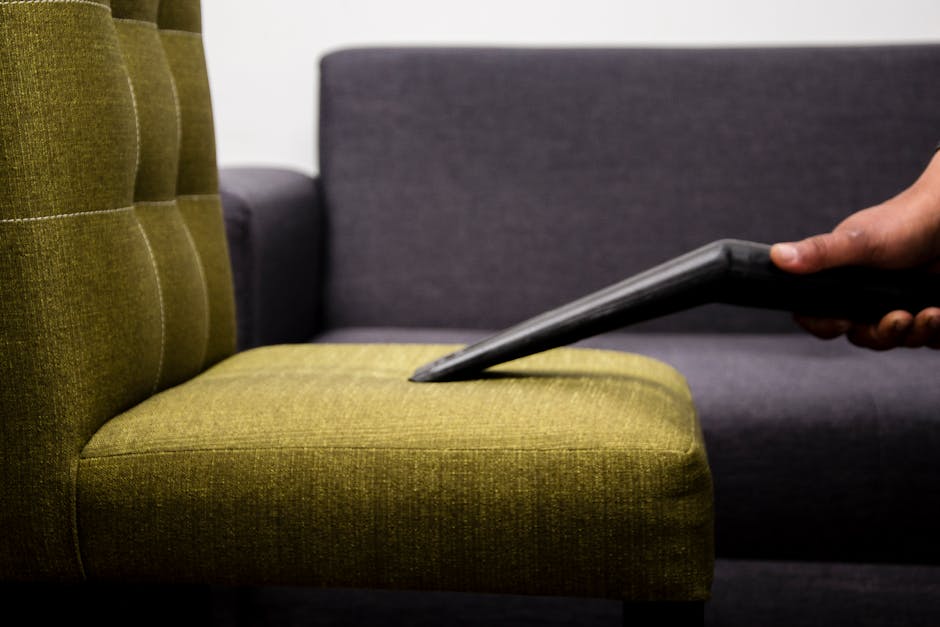
- Vacuum thoroughly. Go slowly, especially along edges, under sofas, and in the direction that lifts the pile most effectively. Two passes is often better than one rushed sweep.
- Remove dry debris first. Bits of dried food, pet hair, and grit should come out before any moisture is added.
- Blot spills immediately. Use a clean white cloth or paper towel. Press, do not rub. Rubbing can push the stain deeper and roughen fibres.
- Pre-treat the mark. Apply a small amount of suitable cleaner to the cloth first, not directly onto the fabric, unless the product guidance says otherwise.
- Work gently from the outside in. This helps prevent rings and spread.
- Lift residue. Dab with a separate damp cloth to remove product, then blot dry.
- Air dry properly. Open windows where possible, keep the room ventilated, and avoid sitting or walking on the area until it is fully dry.
- Brush or groom the pile if needed. Once dry, some carpets benefit from a light brush to restore the nap.
A small but useful householder habit: keep a dedicated "stain kit" in a cupboard. A few clean cloths, gloves, a soft brush, and a safe cleaning solution are enough for most minor accidents. When you need them, you need them fast.
If you are dealing with a sofa or chair, the same principles apply, but with a bit more caution around seams, trims, and cushion fillings. For fuller guidance on fabric care, the sofa cleaning page is a sensible companion read, especially if your furniture has absorbed everyday wear over many months.
Expert Tips for Better Results
Here's where the insider part really matters. A lot of effective cleaning is about small decisions that add up.
1. Vacuum more often than you think you need to. In homes with regular foot traffic, once a week is a good baseline. Hallways and living rooms may need more attention than bedrooms. If the carpet is flattening in paths, that is a clue, not a coincidence.
2. Treat stains before they set. Fresh stains are usually much easier to remove than older ones. Even a few hours can make a difference, especially with drinks, sauces, and anything sugary.
3. Use less liquid. More product does not mean more cleaning power. In fact, it often means more residue. A light, controlled application is nearly always better.
4. Be careful with heat. Hot water can help with some greasy marks, but it can also fix certain stains, particularly protein-based ones. If you are unsure, lukewarm is the safer starting point.
5. Watch the backing. A carpet or sofa may look dry on top while still holding moisture beneath. That hidden dampness is where smells and wicking problems begin.
6. Rotate cushions and furniture when possible. It sounds basic, almost too simple, but it helps prevent uneven wear and sun-fade patterns. Same with rugs. Little shifts matter.
7. Keep track of what worked. If a fabric responds well to a certain method, note it down. Next time, you will be less likely to faff about. And yes, there is always some faff.
8. Know when to stop. If a stain is changing colour, spreading, or leaving a halo, stop and reassess. More scrubbing usually makes the problem worse, not better.
For homeowners who prefer to leave the technical work to a team, a reputable cleaning company can help tailor the approach to the item, fabric, and condition. That is often the difference between "cleaned" and "properly cared for."
Common Mistakes to Avoid
Most cleaning mishaps are surprisingly ordinary. They come from rushing, guessing, or assuming one method fits everything. The good news is that they are easy to avoid once you know the pattern.
- Scrubbing a stain hard: this frays fibres and drives the mark deeper.
- Using too much water: it can leave water marks, backing damage, or long drying times.
- Skipping vacuuming: dirt left in the pile makes wet cleaning less effective.
- Testing nothing first: a tiny hidden patch test can prevent a very expensive mistake.
- Mixing products: not a clever shortcut, even if it seems that way in the moment.
- Cleaning in a hurry before guests arrive: damp upholstery and rushed carpet work are a bad combination.
- Ignoring odour sources: if a smell keeps returning, the spill may have reached deeper than the surface.
One homeowner mistake we hear about a lot is treating a sofa the same way they would a hard chair or kitchen surface. Different materials behave differently. A bit obvious, perhaps, but in the middle of a weekend clean it is easy to forget. If a fabric feels delicate, textured, or absorbent, slow down.
Another common issue is leaving cleaning residue behind. Sticky residue attracts new dirt, so a "fresh clean" can actually make a room look tired again faster. Not ideal. Not even a little.
Tools, Resources and Recommendations
You do not need a van full of equipment to keep carpets and upholstery in good shape. A small, well-chosen kit is usually enough for everyday care.
| Tool or product | Best use | Why it helps |
|---|---|---|
| Vacuum with upholstery attachment | Routine carpet and sofa dust removal | Lifts dry soil before it settles deeper |
| Microfibre cloths | Blotting spills and removing residue | Gentle on fabrics and highly absorbent |
| Soft brush | Refreshing pile after drying | Helps restore texture without harsh abrasion |
| White towel or cloth | Spot testing and blotting | Makes it easier to see transfer from a stain |
| Fabric-safe cleaning solution | Targeted stain treatment | Reduces risk when used correctly and sparingly |
For larger jobs or mixed cleaning needs, many homeowners look at services alongside fabric care, especially if they are also managing the rest of the house. In that case, pages like house cleaning or home cleaners can help you understand how a broader clean may be organised. If windows are also looking dusty while the carpets are being refreshed, window cleaning is another practical companion service.
A small recommendation from experience: keep your cleaning kit simple. Too many bottles, too many "miracle" products, and suddenly the cupboard looks like a science experiment. You really only need the basics done well.
Law, Compliance, Standards, or Best Practice
For homeowners, the main concern is usually not formal compliance but safe, sensible practice. Still, there are a few UK norms worth keeping in mind. If you are using cleaning products, follow the label instructions carefully, ventilate rooms where possible, and keep products away from children and pets. If you are dealing with older furnishings or wool-rich items, extra caution is wise because over-wetting or harsh chemistry can cause avoidable damage.
If you hire a professional cleaner, it is reasonable to expect clear communication about methods, limitations, and any fabric risks before work begins. A trustworthy provider should also be able to explain how they handle safety, insurance, and complaints in plain English. That kind of clarity matters more than a flashy promise.
It is also sensible to check how a company approaches data, payments, and general terms before booking anything. The supporting pages on insurance and safety, payment and security, and terms and conditions show the sort of practical transparency that helps people feel comfortable. No one enjoys hidden surprises, especially not after a cleaner has finished.
If your household is also thinking about sustainability, it can be worth looking at the recycling and sustainability approach for wider cleaning and disposal habits. A neat clean is great. A neat clean with sensible waste habits is even better.
Options, Methods, or Comparison Table
Different cleaning methods suit different situations. There is no single best option for every carpet or sofa, which is why a quick comparison helps.
| Method | Best for | Pros | Watch-outs |
|---|---|---|---|
| Regular vacuuming | Routine maintenance | Fast, cheap, protects fibres | Won't remove deep stains |
| Spot cleaning | Fresh spills and small marks | Targeted, minimal moisture | Can spread stains if rushed |
| Home steam/extraction | Deeper carpet refresh | Can lift embedded dirt | Risk of overwetting if used badly |
| Professional upholstery cleaning | Delicate, valuable, or heavily used furniture | More controlled, expert fabric assessment | Usually not the cheapest option |
| Full property clean | Busy homes needing a reset | Good for whole-home freshness | More planning required |
For many households, the smartest approach is a mix: vacuum regularly, spot clean carefully, and schedule a deeper service when the carpet starts to look tired despite good upkeep. That hybrid approach is usually more cost-effective than waiting until everything looks visibly worn.
If your focus extends beyond sofas and carpets, services such as rug cleaning and carpet cleaner support can be especially useful for decorative or high-traffic pieces. Rugs, in particular, often trap dirt in ways people underestimate. They look innocent. They are not.
Case Study or Real-World Example
Imagine a typical Whetstone family living room: a cream carpet, a three-seat sofa, two children, one dog, and a very determined love of hot chocolate. The carpet looks fine at a glance, but the walkway from the hallway to the sofa is starting to darken, and the sofa arms have a faint grey cast from everyday contact.
The homeowner starts with a proper vacuum, especially along the skirting boards and under the sofa where crumbs and dust hide. Then they spot treat a few fresh marks using a cloth and a small amount of fabric-safe solution, rather than soaking the area. The sofa cushions are rotated. The carpet pile is lightly brushed after drying. Nothing dramatic, just steady attention.
Two weeks later, the room still feels cleaner because the dirt never had a chance to settle in deep. The homeowner also notices that the dog smell is less noticeable after airing the room and maintaining the cleaning routine. It is not a showroom transformation. It is more useful than that: it is a home that feels easier to live in.
Now, if that same sofa had an old stain with a smell embedded in the cushion, the better call may have been a specialist service instead of more household guesswork. That is not failure. It is judgement. And truth be told, good judgement saves money.
Practical Checklist
Use this quick checklist before, during, or after cleaning carpets and upholstery at home.
- Identify the fabric type and check the care label if available.
- Vacuum thoroughly before any wet cleaning.
- Test any product on a hidden area first.
- Blot spills immediately rather than rubbing them.
- Use the smallest amount of moisture that will do the job.
- Work from the outside of the stain inward.
- Remove cleaning residue with a clean, slightly damp cloth.
- Allow full air drying before use.
- Groom the pile or brush the fabric gently if needed.
- Book a professional clean when the issue is too large, too old, or too delicate for DIY treatment.
Small habit, big difference. Really.
Get a free quote today and see how much you can save.
Conclusion
The best Whetstone carpet and upholstery cleaning insider tips for homeowners are rarely the most dramatic ones. They are the practical habits that stop small messes becoming bigger problems: vacuum well, blot quickly, use less moisture, and respect the fabric. That combination protects your home, keeps your soft furnishings looking better, and makes deep cleaning much more effective when you need it.
If you only take one idea from this guide, make it this: clean gently, but clean promptly. That's the sweet spot. The rest is mostly consistency, a bit of patience, and knowing when to leave a delicate item alone. Your home will thank you for it, quietly but noticeably.
And if you're standing there with a cloth in your hand wondering whether to carry on or call in help, that pause is usually the moment good decisions start.
Frequently Asked Questions
How often should homeowners clean carpets in a busy household?
Vacuuming once or twice a week is a sensible baseline for busy homes, with deeper cleaning as needed when the carpet starts to look flat, dull, or marked. High-traffic areas often need more attention than bedrooms.
What is the safest way to clean upholstery at home?
Start by checking the care label, vacuuming thoroughly, and testing any cleaner on an out-of-sight area. Blot rather than rub, use only a small amount of moisture, and let the fabric dry fully before using it again.
Can I use the same method for carpet and sofa cleaning?
Not exactly. The basic principles are similar, but upholstery is usually more delicate and can have seams, stuffing, or trims that react differently to moisture. Carpets are often more forgiving than sofas, but not always.
Why do stains sometimes come back after cleaning?
This usually happens when moisture pulls soil from deeper in the fabric or backing as it dries, creating a ring or "wicking" effect. Using too much liquid or not removing residue properly can make this more likely.
What everyday products should I avoid on carpets and upholstery?
Avoid anything harsh, strongly bleached, or untested on fabric. Also be cautious with mixed-product cleaning. If in doubt, a mild fabric-safe cleaner and a careful patch test are the safer route.
How do I get rid of pet smells in a sofa or carpet?
First remove the source if there is one, then clean the area properly rather than masking it. Airing the room, thorough vacuuming, and a suitable deep clean can help. If the smell keeps returning, it may have soaked deeper than the surface layer.
Is steam cleaning always the best option?
No. Steam or hot-water extraction can be effective, but it is not suitable for every fabric or every level of soiling. Some items are better treated with controlled low-moisture methods or by a specialist who understands the material.
When should I hire a professional instead of doing it myself?
Hire a professional when the item is delicate, valuable, heavily stained, or has an odour that will not shift. It is also a good idea if you want a deeper, more even result without the risk of overwetting or damage.
How long should carpets and upholstery take to dry?
Drying time varies by fabric, method, room temperature, and ventilation. The key is to avoid using the area until it is fully dry to the touch and no longer feels cool or damp underneath.
Are there special considerations for wool carpets?
Yes. Wool can be more sensitive to harsh chemicals, excess moisture, and aggressive scrubbing. Gentle cleaning, careful testing, and low-moisture methods are usually the safer choice.
Can one-off cleaning help before guests arrive or after a busy season?
Absolutely. A well-timed one-off clean can refresh the main living spaces, lift the look of carpets and sofas, and make a home feel calmer very quickly. It is a useful option when daily upkeep is not enough.
What should I ask before booking a cleaning company?
Ask how they assess fabric types, what methods they use, how long drying may take, and whether they provide clear information about safety, insurance, and pricing. A good company should answer those questions plainly.
What if my home needs more than just carpet and sofa care?
If the whole place needs attention, it may be more efficient to combine services such as house cleaning, domestic cleaning, or deep cleaning so the property feels properly reset rather than just partly refreshed.